Sunday, May 09, 2021

My Slantomatic Summer


The man’s Slantomatic sewing machine had been damaged in a fire at the racetrack. My summer job in customer service at the Singer shop, was to record details about repairs requested. 


     “Going out to the racetrack later, honey?” the man asked, between my questions. 


     “Er...maybe,” I said. I was seventeen, too young to buy an entrance ticket. 


     “Well, if you do, lay some cash on Ringadingding in the seventh. I’ve been training her and she’s ready to go.”


     “Okay,” I said. Lay some cash on Ringadingding? It was an insider tip—a sure thing. I recognized this because I was no stranger to racetrack wagering. My maternal grandmother was a gambler. If you saw her sitting by the fire, a crocheted throw on her lap, you’d never guess she had odds running through her brain. Grandma and my three maiden aunts spent hours every week filling out contest forms. For them, chance was a serious business.They’d won their house in a church lottery; their car in an insurance company raffle.


     I couldn’t wait until 4:00 pm when I left work and took the three buses to the racetrack. The cashier barely looked up as he slid me an entrance ticket. The odds were twenty-to-one on Ringadingding. I bought a twenty-dollar ticket to win, almost a week’s salary from Singer. Ringadingding ran her heart out and won by a neck. I collected my four hundred dollars in twenty-dollar bills.  Dizzy with excitement, I got home and burst through the front door with news of my windfall. Dad was reading the paper. 


     “Dad, I’m not going back to school!” I said,  waving my stack of twenties. “I won four hundred dollars at the track on Ringadingding.” 


     “Fine,” he said, as if he’d been anticipating my announcement. “Though I wouldn’t recommend that as a way to make a living.”


     “But Grandma has,” I said. 


     Dad sighed. “Your grandmother is an exceptional case. She gambled as a last resort. She’s very lucky and an expert money manager.”


     “Maybe it’s genetic? Maybe I inherited her genes.”


     Dad looked resigned. “If you insist on keeping it up, do it through Grandma's bookie, George. It’s illegal for you to go to the track. You know that. And you can’t tell anyone about this.”


     A bookie? I was going to have a bookie. And it was a secret—to add to the list of secrets I already had to keep: my step-grandfather was gay, my Aunt Nilla was a lesbian, Mom was pregnant when my parents got married. And now I was a gambler. You couldn’t open a closet in that family without being smothered in skeletons. 


     A month later I was broke just in time for my return to school. As it turned out I was lucky, like Grandma,  because I lost so absolutely. The Slantomatic job opened a door into another world I learned to avoid early in life. My wise Dad never had to say another word on the subject. 


Saturday, May 08, 2021

Mother's Day flowers


Two Sunburns


Sepia Saturday: Reading Lolita at the beach


     I blame Vladimir Nabakov for my first literary sunburn. If it hadn’t been for Lolita perhaps I’d have fewer barnacles on my legs today. 


     It happened on a weekend camping trip in Baja at La Bufadora, Mexico, circa 1971.  A dozen of us, family and friends, rented a large tent, and drove south across the border early Saturday morning. The day began overcast, a typical May gray, and after settling in, I changed into my polka dot bikini, grabbed my book and stretched out on the sand. Soon the fog burned off and I applied the suntan lotion/basting sauce of the day--baby oil and mercurochrome. In those days, we tried to get a tan, not prevent one, ignorant as we were to the dangers of the sun. As I lay, propped on my elbows, lost in the brilliant writing and the antics of Humbert Humbert, the backs of my legs roasted to medium rare.


     That night in the huge tent we had a nutty and memorable time. The tent, as it turned out, wasn't quite large enough, so we had to all roll over together and exit en masse to pee. We were awake most of the night convulsed with laughter at our poor planning, but at some point I began to feel the skin on my thighs shrinking. By early morning I had trouble bending my knees. Eventually I had to resort to a lock-kneed walk, like a North Korean soldier. Monday, the throbbing and swelling was so severe, I had to call in sick to work. There was no way I could pull panty hose over my tender flesh. While the blisters on my thighs healed I read Pale Fire and Pnin. A week later, Hell’s itch took over and nearly drove me mad. It took a month to fully recover and while I regret the sun damage, I don’t regret the weekend with Vladimir. 


     Khaled Hosseini was responsible for the second burn. In Bali, I was stretched out on a lounge, sensibly shaded under an umbrella. I spent a glorious afternoon there with Khaled Hosseini, gobbling up his novel, "A Thousand Splendid Suns." Just about when the two women protagonists are getting ready to murder their husband—it was a polygamous arrangement—I felt a twinge on my foot and realized it had slipped into the hot Balinese sun. Far from a thousand suns, it was just one, but equatorial and ferocious. From it’s cooked look, my foot had been baking for a while. I yanked it back into the shade under the umbrella and unable to quit, kept reading, until in the story, a shovel rains down on bad-hubby’s head several times. It wasn’t a serious burn that time; it soon faded and aside from a temporary limp, I was fine. 


     It’s rare these days to see someone reading a real book on the beach. Younger people read indoors or by pools, on their Kindles, I guess. Or they walk, and listen to books on earphones. And they’re careful about sunscreen and avoiding sunburn. 


     Decades past my polka-dot bikini heyday, soon I’m going to spend a reading day in Oceanside. My beach reading costume is now a pair of nylon shorts and a T-shirt. Covering up is key because nobody, not even me, needs to see my cellulite and saggy bits. Only a bit of thigh will be allowed to show— an older and wiser version of the poor burned mess of my youth. How I look forward to snuggling into the sand and preparing for a second seduction, fifty years after the first! 


I’ll open my book: 


“Lolita, light of my life, fire of my loins. My sin, my soul. Lo-lee-ta: the tip of the tongue taking a trip of three steps down the palate to tap, at three, on the teeth. Lo.Lee.Ta.” Lolita by Valdimir Nabakov


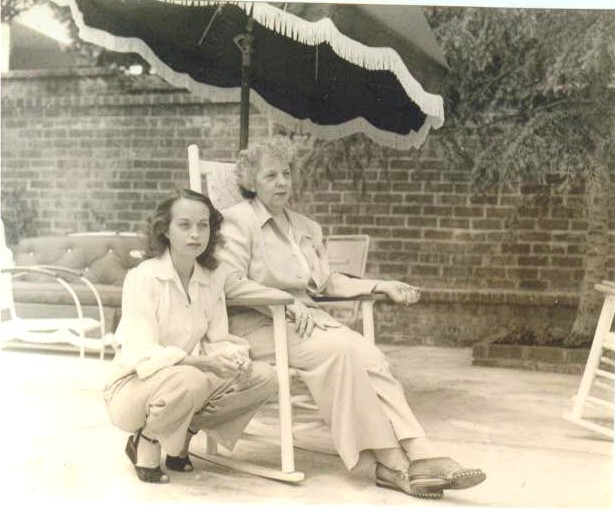
For the Umbrella prompt; Richard’s mother and grandmother on the patio of the Studio City house. They set their books aside to pose together for this photo.


Monday, February 17, 2020

Sen-Sen Farewell

1 Box 12-packets Old Vintage Candy Sen Sen Mint Licorice Breath
$399.00 on eBay. 
 The last few packages of Sen-Sen on the planet are selling on eBay for $30 - $40 each. An investment possibility? What will they be worth in ten years when I’m 87 and in need of extra cash? Will everyone who remembers Sen-Sen be dead? Probably.

I mentioned it at the book store to Jean, my friend. We were discussing a perfume we both wear, called Elixir which I told her I thought smelled faintly like Sen-Sen. She disagreed but immediately recalled a moment from her childhood in a farm town in Iowa and an elderly man, Arnold, who went to their church. Her parents had always told her to be nice to Arnold, a WWI veteran, because he had the shakes. Arnold kept Sen-Sen candy loose in his pocket and would hand them out to the kids, each tiny piece accompanied with a lot of old-man pocket lint. Jean remembers taking the tiny gift, being slightly repulsed, and telling Arnold she would save hers "for later." Jean has never been much for lint. 

My memories of Sen-Sen are related to drinking. I remember it as the tell-tale scent that surrounded the drinkers, and that was just about every man, when we were children. It was a big seller in bars and at the legion hall, but actually did the opposite of the intended masking. The minute you smelled it you knew something was being covered up and it stained the user's tongue a freaky greenish black.

For one crazy moment I thought about going into business, making a new version of Sen-Sen and contacted the manufacturer of a tableting machine. The more I read, the less interested I was. But then I read about one of the manufacturer's customers who had the brilliant idea to tabletize toothpaste. Pop a tablet in your mouth and it softens and becomes brushable. Goodbye billions of tubes and tops. After a little research I found this isn't a new idea. People have been making versions of this for years. Here's one method. Looks like fun to try.


Monday, January 27, 2020

1917 Lucy's Letter

Francis Joseph Killeen 1917
Canadian forces at Arras, France


We saw "1917" the other day. Great film and I have a special interest in the piece of history because of my father's story.

Imagine this. It's Dec. 26th, 1916, Boxing day in Winnipeg, Canada. The neighbors pop into each other's houses up and down the block, admire each other's gifts, drink tea and feast on Christmas leftovers, mostly Christmas cake. Before they enter the house, the visitors stomp their feet on the doormat outside because their galoshes are caked with snow. The first real winter snowfall had started earlier in the morning. Deep winds have blown the snow into drifts. Diggers, a team of special snow removers, can't free the half-buried streetcars. The city is almost paralyzed.

At my grandmother's house, Lucy Armstrong Killeen Massey and her second husband Bertie, twenty years her junior, along with most of her nine children receive their guests, pour tea and pass "dainties" around. In the middle of the celebration, my father leaves the house and makes his way, through terrible weather, to the recruitment station where he enlisted. Because he is under age, he lies on his Attestation papers stating that he was eighteen, not seventeen. What moves him to sign up on that very day— on a holiday, in a snowstorm? And what motivates his step-father, Bertie, at age thirty-two, to enlist the very next day, Dec. 27th?


The following appeared in the Winnipeg Tribune on that day. Is the sentiment enough to move a seventeen-year-old to enlist?


Or maybe he is influenced by a neighbor who lived a block away and had recently returned from the front. Perhaps the neighbor comes to tea that day and tells exciting stories about his time overseas? At seventeen, Dad lists his occupation as Warehouseman on the Attestation paper. Knowing Dad, I imagine he was bored to tears and looking for excitement.

He agreed "to serve in the Canadian Over-Seas Expeditionary force and to be attached to any arm of the service therein, for the term of one year, or during the war now existing between Great Britain and Germany should that war last longer than one year, and for six months after the termination of that war provided His Majesty should so long require my services or until legally discharged."

My grandmother must have been dismayed but the recruitment posters plastered around the city encouraged women to send their sons to war.


As in the film, there is an important letter involved in my story. This one, from the HQ of the Overseas Military Forces of Canada, likely determined that my father survived World War 1. Lucy wrote to HQ on January 7th,1918 including Dad's birth certificate. She received this letter back. Note the reply to her request was dated a little more than a month from when she wrote it—her letter traveled from Canada to England and she received a rapid reply in less than a month, during a war.


Why did Lucy wait until a year had passed to take action? Dad had shipped out from Halifax and was trained at Shornecliff, England. For most of the year, 2017, life at Shornecliff was pretty good for Canadians. They were well liked by the British. But in October, 2017 he was sent to France where Canadians were little more than cannon fodder. As of 10/22/17, he was at or near the front. 

I can imagine Lucy opening a letter from Dad and reading about life in the trenches. I wonder what he said? He sent this cryptic post card in October.


"Some bashful looking baby, eh?"
Oct 8/17  Dear Mother, Just a few lines to say I am well and enjoying health, and hope you are and also little Pearl. Tell Lorne and Hilda that will not be able to write them for a couple of weeks. Don't be surprised if you don't hear from me for a while. Will write you soon if possible. Your loving son, Joe

 I'm sure any excitement he might have felt for the first months in England had faded away and he was at risk every minute of every day. I don't believe Lucy wasted any time and acted as soon as she could.

Because of Lucy's letter, Dad was pulled back from the front and out of the trenches at Arras, France, which is captured in the film in gruesome detail—the terror, the lack of information, the close quarters where everyone was squashed together like sardines enduring the noise, the smells, the weather. Instead, Dad spent several months in the rear, dragging ammunition around. As soon he turned nineteen he was moved back to the firing line and was wounded (gunshot to the eye) on his first day back. It was September 3rd and he was in the 2nd Battle of Arras where the objective was to break the German Drocourt-Queant line. He was shipped to Cambridge Hospital in Aldershot England to recover. Fortunately the war ended and he never had to return to combat.  

Today, January 27th, 2020 is the 101st anniversary of Dad's discharge. On his discharge papers he was nineteen years and five months old. His trade was listed as student. He had a small scar on lid of his right eye. I'd say he was a lucky guy.

He couldn't wait to get back to school. Dad graduated law school and passed the bar in 1923. He left the military between the wars and was in private practice for years, but he volunteered again during WWII in 1939. He was forty when he enlisted this time, trained troops in Fort William, Ontario and served as a Judge Advocate. After the war he threw himself into being a veteran. He served as the legal counsel for Deer Lodge Hospital, the Veterans hospital, in Winnipeg. He worked for the Department of Veterans affairs and the Veterans Land act. He was a lifelong member of the Canadian Legion which was formed after WWI as a place where veterans could talk to each other. Long before we recognized PTSD, these men were treating each others trauma by befriending each other and providing mutual support. 

Go see the film, kids. You'll get the real feeling for what your Grandfather, Great Grandfather, Great Great Grandfather and Great Great Great Grandfather endured. And how close we all were to not being here at all!!!


Monday, January 20, 2020

Back to Bali for Christmas

Sunset from Candidasa
Breakfast every morning at Villa Sarchi
A young Bali beauty

This year we flew JAL staying overnight in Tokyo before going on to Jakarta the next morning. It's easy to fly from Jakarta to Denpasar on Air Asia, which is like Southwest Airlines, no frills, on time, gets the job done. 

Like last year, we were again surprised as the ever-worsening traffic and the demise of many things we loved about the island. The place is bulging with tourists from China and Russia and of course the Aussies. The Balinese keep themselves more and more separate from the tourists, except for work. They must do this to protect their culture. 

Villa view in Candidasa. Beach and Mt. Agung.
At the last minute, the reservation at our villa in Singaraja was cancelled. The owner called to tell us the place was falling apart. Attacks by termites and some serious deterioration of the pool forced her to close the place for repairs. Graciously she offered to help us find a place and she paid for the difference in the price. Fortunately a place I've always wanted to try, the Samuh Hill Residence was available and we spent a glorious six days there, agog at the view and amazed at the service.

Full moon in Amed
The villa in Amed was just as enjoyable the second time around. It has the best pool I've ever had the pleasure of soaking in for ten days. In Ubud we enjoyed a place owned by a Balinese (a rarity) with a rice field in a jungle-like setting. Ate a great restaurant across the way from it — Sacred Rice. Lovely place.

We had a great time in our own very familiar places in Bali. But sadly, most of the island is disappearing under concrete, tourists and cars.
Salt man
They solved the dog problem and now they have a cat problem.
Sacred Rice restaurant


Wonderful clouds over Indonesia flying to Jakarta. 

Friday, September 20, 2019

Coincidence

"Good morning, Doctor," I said to the excellent customer at the Bottom Shelf. He's usually there early in the morning. He knows what he likes and makes decisions quickly.


"What do you like best about shopping here," I asked him recently.

"This is a gold mine for the discerning collector," he said and added quietly,
"You know, I'm a dying man. But this is one of my pleasures."

"What?" I said.

"Right now—I'm all hooked up with leads to a Holter monitor. It's just a matter of time for me." He lowered his head back to the $.10 bookshelf.

"Is this a coincidence or what?" I said, laughing hard. I whipped open my loose jacket to expose the monitor dangling around my neck.

 "I'm wearing the same thing!"

No reaction from the doctor. It was an awkward situation—my jacket gaping and my impulsive words hanging in the air between us. It was a good time to stop talking but instead of shutting up, I talked more and faster.

"But I'm not dying just yet, I hope. Only monitoring my heartbeat to see if I have Afib. I thought it was routine." I laughed some more and waited for him to join me. But he didn't think it was funny as I did. He was somber-looking as he quoted Epicurus —the art of living well and dying well are one.  

I stopped laughing and said goodbye. I never know how to answer somebody who quotes.  

When I got home, I googled the quote to see if I'd missed something in our exchange and I found this statement which put words to my friend's frame of mind. Personally, I can't see the value of viewing all of your unfolding life as a prelude to death. And I don't get the notion of living and dying being of equal value. 

“You are a beautiful person, Doctor. Clearheaded. Strong. But you seem always to be dragging your heart along the ground. From now on, little by little, you must prepare yourself to face death. If you devote all of your future energy to living, you will not be able to die well. You must begin to shift gears, a little at a time. Living and dying are, in a sense, of equal value."--Nimit in "Thailand” 
― Haruki Murakami, After the Quake

Cruising on the Okhotsk Sea

Earlier this year we cruised from Tokyo to Vancouver with a couple of Russian ports on the itinerary.

The Captain just now announced the temperature of the Okhotsk Sea is 2 degrees centigrade (36F), the same temperature as the air. I saw a lone hardy couple outside waddling along the deck past the window of the library where I’m reading and snoozing. They’re so bundled up with thermo-block padding and zero-proof stuffing, they look like walking bowling pins. 

The Viking Orion’s library, comfortable and warm, is advertised  as having been curated by Heywood Hill, a London bookshop owned by the Duke of Devonshire. Heywood Hill. Unconfinable, like dandelion seeds blown off a stem, the library is scattered all over the ship. Books are stacked by the swimming pools, in the bars, in every public room, in the restaurants. We don’t walk around this ship; we thumb our way around from glossy photography books and art portfolios to best sellers and leather-covered volumes of Chaucer and Walter Scott. Readers slouch against the bookcases, lounge in the leather chairs, curl up in front of the fire. 

Yesterday in our first Russian port, we took back-to-back tours in Korsakov/Sakhalin. After being tendered ashore, we searched for our bus, number fifteen, headed for the Chekhov museum in Yuzhno-Sakhalin. Past rows of shiny public buses, a beat-up greyish-white chariot awaited with our number on the windshield. The several hundred other people who were taking a cultural tour (statue of Lenin, war memorial, statue to commemorate the Korean diaspora) were escorted into public buses commandeered for the occasion. The twenty-nine of us who opted for Chekhov got the “Party Bus” so named by Victor, our guide and host. Inside, it was decorated with an explosion of doilies, an essential element of interior decorating in this part of the world. 

Victor, a tall handsome man, wore a thin Clark Gable style mustache. He had flawless skin, not a mark or wrinkle to be seen on his face or hands despite his fifty-eight years. A former history teacher, oil company worker, amateur wood carver and tour guide he was the best part of the tour. He knew, as he said, how sausages and politics are made and told us about his views on both—great conversation on the longish bus ride through the targa and past the depressing local daschas which have evolved during this recent period of prosperity from “dog houses” (Victor’s word) into cheap boxy kit houses worth half a million each (building cost). In the grey drizzle, the holiday houses looked as inviting as prison camps. 

Our first stop was the municipal sports complex/tourist trap for the toilet and big surprise—to shop a display of locally made trinkets. The toilet was a big hit (few of us were under sixty) but why did they think we’d be interested in nesting dolls and nesting Putins, ball caps with Korsakov/Sakhalin written in tiny letters (so it fits) across the bill and felt christmas ornaments made by the local children? I doubt they made a single sale as few of us have rubles and the ship doesn’t do currency exchange. It’s illegal for private citizens to exchange currency, so we were all at a stand-off. 

Back on the bus we leaned into our crocheted head-rests as we rolled through the plain town (lots of boxy apartment buildings, one fancy condo building for oil executives) onward to the Chekhov museum, a modern structure, and not as billed, the former home of Chekhov and his family. Oh well, we got the usual negative Russian greeting from three middle-aged ladies wearing aprons and half-barricading the way. Volleys of loud Russian ping-ponged back and forth between Victor and the women as we stood in front of a diorama of a ship’s prow splitting a foamy sea. A couple of stairs led to a real ship's wheel. 

Victor explained the loud volley was just the usual Russian thing.

“Whoever gets here/there first makes the rules,” he said, shaking his head. Whatever the argument, Victor with his princely bearing and booming voice won. The ladies retreated to the back of the crowd clucking their tongues and looking distraught. Our weak smiles were met with glares. 

“Climb the stairs (of the diorama) and play Captain,” suggested Victor, lightening the mood. We all shifted nervously from foot to foot dreading that he’d pick one of us to play Piggie. Thankfully, he didn’t and we moved on to view a manuscript, the only real Chekhov item in the museum, Victor told us. Then he launched into a few terrible anecdotes about the conditions in the Sakhalin prison which Chekov is famous for exposing. 

“They called them lamb,” Victor said, referring to the escaped prisoners, caught by the guards and cooked up for dinner. “What else are you going to do with them?” he asked with an uneasy chuckle. “There was no food around for hundreds of miles.” Victor made sure we recognized his sarcasm. Richard, unable to contain himself, baa-aa’ed softly in my ear.

We trudged through more dioramas of bizarre, inhumane prison conditions (the Russians have always excelled at imprisoning their citizens) and walked in the rain to the deluxe hotel next door for blinis and tea. After the cannibalism talk, we were starving and much to our surprise the food was delicious, but The Lord giveth and the Lord taketh away. A Chekhov expert followed with a forty-minute lecture, earnest but humorless and dull. She failed to paint any kind of picture of one the most interesting authors in Russian literature. We only heard the boring bits of biography—dates and more dates interspersed with the names of musty Chekhov scholars. Victor translated and fortunately editorialized a bit. The speaker would close her book as if the end was in sight and then open it again and continue. Victor said, “A Russian never means goodbye when she say goodbye for the first time.” Richard sat us in the front, right under the speaker’s nose, so my struggle to stay awake was on full display.  

At last it was over and we dashed in the rain from the party bus to number thirty-nine where Sergei, our new guide, was waiting. Educated in Korea by a professor from Tennessee, Serge shared his world view of things and sounded like the millennials do world-wide. He escorted us to a song and dance performance by a local troupe presented in an auditorium with the worst seats ever, well almost—the eleven-inch wide seats at La Scala still hold the record—followed by more opportunities to buy awful handicrafts, poorly displayed. Then came a round of public square and statue visiting. Our guide gave us a lot of interesting information about the Koreans on the island which piqued our interest. All you can ask from a tour. 
The theater seats were designed so that everyone had a head view.


Wet, cold and tired we were happy to get back to the warm ship where they greeted us with hot cider. We need the next two days at sea to recuperate before arrival at Petropavlovsk-Kamchatsky, Kamchatka, Russia. The weather forecast isn’t good so we’re happy we cancelled our fishing trip. What fishing trip you ask?...to be continued.


Thursday, September 19, 2019

La Scala

I'm back to blogging again after more frustration with fiction.

Milan, last year:
Boring photo of the ticket space

Looks calm but confusion reigned in six or seven languages
Getting tickets to La Scala was a more interesting experience than the actual opera, Alibaba and the forty Thieves, itself. We guessed, in a fightback against scalpers, the Italian government had installed checks and re-checks on buying tickets at the box office. We had to get on one list with our names and passport numbers. After a long wait, we were escorted to a machine where we were supposed to relist everything which would then allow us to get on the real ticket list. By tuning into other conversations and watching people, we realized we didn't have to check-in at the machine. Somehow we ended up in a group allowed to buy the really cheap tickets, eleven euros each. Italians seem to enjoy everything—even the lines and confusion had a good-natured vibe.

The tickets were terrible but even the best seats at La Scala for 250 euros aren't very good. We were in the nose-bleed section and could barely see the top of the curtains running across the stage. By standing up we got an occasional glimpse. The opera was awful...overture not bad, but everything else, mediocre. Our seatmate (we were almost in each other's laps) was a nineteen-year-old Italian kid, thrilled to be sitting next to two Californians. He'd spent a summer vacation in a house trade with people from San Clemente. At intermission, we said, "Ciao" to the kid and snuck out.

Here's a review by Renata Verga on the Bachtrack website:

 https://bachtrack.com/review-cherubini-ali-baba-academy-scala-milan-september-2018

At the head of the instrumentalists, conductor Paolo Carignani managed to get the sounds and the right tempi of a score that, after the brilliant overture, is often limited to supporting the singers in their melodic lines without turning into a tune to remember. Yes, the wisdom of Cherubini's writing is admirable, but one remains indifferent to the plot and to the two-dimensional characters on stage. Ali Baba is not a grand-opéra, but has its own dances, here wittily cavorted by young, some very young, ballet students in Emanuela Tagliavia's choreography.
Liliana Cavani, who took care of the staging, has clearly expressed her intent to relate the story in a very linear fashion, without opting either for the comic nor for the fairy-tale tone. The result was a visual rendition without a backbone which, even if it nods to contemporary taste – the library in which the four main characters as students read the folk tale and have their first love skirmishes; the getaway in motor-scooter in the finale – fall back on outdated staging and scenery. It does not put to use some twists of the plot, such as the procession of slaves with the treasures stolen by Nadir, which could have given a more theatrical touch to the staging. Meanwhile, the director trivializes other moments: why the need to show Delia having a footbath during her only true great aria? Also, one could have willingly done without the sight of the burnt corpses of the thieves during the cheerful and hurried conclusion.
xxxxxxx

Afterward, we stopped into the new Starbucks cathedral (no line at 9:45, just before closing), had a pizza and bought croissants for breakfast.

Mixed feelings from the Italians we talked to about Starbucks. They love their own coffee but most agree what Starbucks did to an abandoned post office building in mid-Milan is fantastic. And the Starbucks itself is a marvel, although still shaking out the opening problems.

I noticed the next day, which we spent at the Cathedral, that the garden at the front of the Cathedral square was donated by and being maintained by Starbucks. They are good neighbors. 

and more months.....

The trees are leafing out nicely. Instead of looking like broccoli spears, they're starting to look like trees again. Soon we'll have to start watering unless we get some early rain. 


We had a pleasant afternoon at the Bottom Shelf yesterday. A woman came in and bought books she intends to send to the Solomon Islands, where her brother runs a seafood cannery. If you've donated books recently to the store, they might be on their way here:


One of many interesting facts about the islands: Blond hair occurs in 10% of the population in the islands. This is the highest occurrence of blond hair outside of European influence in the world.  After years of questions, studies have resulted in the better understanding of the blond gene. The findings show that the blond hair trait is due to an amino acid change of protein TYRP1. While 10% of Solomon Islanders display the blond phenotype, about 26% of the population carry the recessive trait for it as well.

Here's how the blond gene is expressed: 
School children - Solomon Islands


We had among our customers, a teacher who refused her discount. "You charge so little I couldn't think of it." And a woman moving to Northwest Arkansas who came in to donate a box of books and left with a good-sized bag of purchases. For book lovers, it's difficult to get out of the store empty-handed. 

Despite swearing we'll resist and leave the books in the store, I picked up two small but powerful books:

Has a great index:


A customer brought this book, Merde, to our attention and thought we should take it off the shelf. I rescued it from la poubelle (the trash) and flipping through the pages discovered a bit of historical language antagonism. One of the many French words for condom is une capote anglaise, (note that it's a feminine noun), literally an English cape or coat. Funny, since we (our troops overseas in WWll) called them French letters. Why? Because they were distributed to the troops in France in small envelopes.


Nice to know about withstanding all climates and that they're British Made.

Donations were flowing in all day. The addition of credit card capability has had an impact on sales. Instead of putting books on hold, we get the sale! When people don't have the cash and say they'll come back, they often don't. Now we're capturing those sales on the spot, a big return for the small fee the credit card companies charge. The store is on track to earn about $88,000.00 this year.


Friday, April 19, 2019

Months pass...

"What the f---? Are they out of their friggin minds? Where did the trees go?" said Pink, disgusted, as he peeked out the door. He stood, half-in and half-out, moving forward and then backing up. He stuck his nose out and sniffed. "Charlie wasn't here last night." Charlie, a big homeless Tom, visited regularly, attempting to claim ownership of the patio, spraying the pillars and sometimes even the door—the very door Pink and Cashew claimed as their own. The one they used to go in and out, and in and out, and in and out and in and out. And that's just the morning. ...

Cashew bobbed around behind, trying to see past Pink. "Thank God, that freeloader's gone," he said. "At least something good's come out of all that chain-saw noise and people shouting. Uh oh--look at that lizard. Let me out!!"

Pink turned around and hissed. "Will you stop crowding me? There's no place to hide out there now. Geez...all I can see are stumps. The grove looks like a scarecrow convention. Why didn't they warn us? My favorite spot by the oak tree is totally exposed now. Where am I going to sit?"

"Don't speak to them anymore!" said Cashew. "I'm not going to. Eat and sleep. That's it from now on!" He backed into the house, indignant. He was frightened but as cats are wont to do, he raised his back leg as high as it would go and licked his arse, glancing around casually to see if anyone was noticing his gymnastic moves. He made another attempt to push past Pink and get out, but Pink wasn't budging—he stood his ground, half-way through the door, muttering to himself.

"Do you mean––are you suggesting—no making biscuits?" said Pink, incredulous at the mean streak in his brother. "You can't mean we're giving up on purring? And curling up in their laps?"

"Yes, that's what I mean. Nada. Nothing. See how they like it." Cashew walked out of the room, tail swishing and continued his venomous diatribe. "Punish 'em. Double up in the annoying department -- bother them in the bathroom and run ahead of them into the closet to hide and walk on their computer keyboards and scratch our claws on the carpet, don't come when called and jump up on the kitchen counter and drink out of the toilet and fight with each other and all that kind of human-annoying stuff."

"...but, but...they have the can opener," said Pink, astonished at the stupidity of his sibling. No wonder they call him the Idiot, he thought. 
                                                               ******

Our avocado trees have been stumped and today the surgeons began painting them white and re-establishing our irrigation system. Although I miss living in a green bubble, it's refreshing to get
light in the house and recover some of the views hidden for years behind the huge trees. The cats, used to sneaking around as cats do, under the leafy cover, are a bit shell-shocked. They stick close to the house and crouch under the deck, muttering to themselves.  


Cookbooks and Conversation at the Bottom Shelf


Someone in our small town has hung up their apron for the last time—probably a well-heeled and enthusiastic cook. I’m sure of this because ten boxes of good cookbooks are piled up in the workroom. Cooks don’t donate their cookbooks to the Bottom Shelf bookstore just because they’ve moved. It takes more than a change of address to separate them from their collections.

The best cookbooks we get, in my opinion, are dog-eared and rich with marginalia. Often a flutter of magazine clippings and cook’s notes will fall out of the pages.They reveal more about the donors than the book choices. On a recipe for sweet potatoes—”Thanksgiving—everyone liked it. Add one tsp. vanilla.” The author/cook cannot leave well enough alone.

“I don’t like shiny food,” says Jean, our shift manager, as she scans a couple of the photos and thumbs through recipes. She has a keen and discriminating eye. She shows me more photos. A slab of unidentifiable meat bathed in maroon sauce glistens under the light. She shudders and marks the book $.10. The book sold for $29.95 when it was new. Now it has the same value as a tissue-thin plastic bag from Walmart.

Jean looks over the five boxes on our work table. “Set aside anything with gelatin in the title,” she says.

“Here’s one—Jello Jigglers,” Miranda says plucking a thin volume from the pile. At twenty-eight, Miranda is the youngest of us. “How did you all survive eating this stuff? It’s so obviously devoid of any nutrition. What’s in it? Chemicals, food coloring and sugar?” Jean at eighty-six is the oldest of our managers. She and Miranda share a love for The New Yorker and James Thurber. Somehow, the conversation has drifted to a discussion of favorite Thurber works. I enjoy listening to the intergenerational discussion which includes details about Thurber’s height (short) and temperament (mean). Both Jean and Miranda like Thurber’s dominant women and spineless men. Although I don’t join in, I think about Walter Mitty, my favorite Thurber creation and his made-up medical jargon like “obsteosis of the ductal tract.” My own father suffered from a number of such illnesses which would strike without fail just before mass on Sunday morning and require immediate bed rest.

“Where’s your father this morning?” the priest, Father McIlhenny, would ask us after mass as my sister and I filled by.

“He’s got hypotocusis in the hoodinacapap,” I would answer. My older sister, by then wise to my father’s jokes, let me tell the priest. The words came easily and fast to me because I said/sang them while I skipped rope.

“Again?” Father McIlhenny would smile. I suspect he was a Thurber fan too.

Back in the workroom, I look through the jiggly book. The jello photography is disastrous—plates crowded with clashing colors and shapes, vegetables frozen in aspic like tortured souls in hell. The color separations are poor and the printing is fuzzy enough to make me think my freshly de-cataracted eyes are failing. Miranda, wicked smart and energetic, eats only organic vegetarian foods—a living testimony to the health benefits of kale. She makes me feel like rushing home to eat a bag of carrots.

I ask her opinion about the political correctness of the word “jiggler” which sounds vaguely offensive to my ear. I think of big round Santa Claus bellies, massive ungirdled asses, the handles of running toilets. There were no recipe sensitivity readers when these were printed. I wonder if there are now?

Years ago, I used “prick” in the instructions on a package of frozen pie dough. My boss reddened with embarrassment from his collar to his hairline, as he read my instructions and told me I could not use the word in print. EVER.

“But that’s what you do,” I said, in disbelief. “You prick a pie crust before you bake it. It’s a culinary term.” My arguments fell on deaf ears. “Pierce with the times of a fork,” was the expression we used instead. Pierce was much more tolerable for my straight-laced Swedish boss but still bothers me forty years later. I wonder what he’d say today now that the word pierce, hijacked by the body-art business, conjures up different thoughts. People pierce body parts I didn’t even know existed like the frenulum and ampallang. My niece talks about her industrial and tragus jewelry. God only knows where they are. If I was still writing instructions, Ole, my boss, might now prefer “prick” over “pierce.”

Jean picks up a non-cookbook volume which reminds her of her small Iowa town’s daily newspaper, The Eagletown Echo and the “What’s happening” column which contained all the local news. “They talk about Facebook disclosing too much now,” she laughs. “That’s crazier than a fart in a skillet. You didn’t have any secrets back then. If you traveled all the way to Des Moines, fifty miles away, the Eagleton Echo would have a reporter on your doorstep asking for details. And before nightfall, everyone in town would have read the story and judged everything you did.”

A customer interrupts. “What’s that?” She points to a handwritten note on the counter.

“Oh, probably something somebody found in a book,” I say. “We keep those. They’re amusing. This looks like a shopping list: one-half pound ground lamb,”…

“Hey,” she says. “That sounds like what I’m off to buy. I need lamb for the meatballs I'm making.” She gropes around in her big floral tote, looks up at me and back at the list. “Hey, that’s my list! I must have dropped it.” We laugh that we were both oblivious, thinking it a coincidence.

“So, what are you making?”  I say.

“An Alton Brown recipe for meatballs you put in paper egg cartons and bake in the oven. The grease is absorbed and the meatballs get crispy.”

I suggest she add a fire extinguisher to the list of ingredients.


4/16/19